
While the likelihood of these states going the Lanka or Greece way may be an alarming assessment, the financial situation of some states such as Punjab and West Bengal is indeed quite weak.

The surge in wheat export from India owing to the Ukraine crisis has once again demonstrated how farmers in states that have flexible marketing frameworks and low taxes benefit more from an emerging situation. The bulk of the wheat exported from India, trade and industry sources say, is being sourced at rates significantly higher than the state-mandated price of Rs 2,015 per quintal in Madhya Pradesh (MP), Uttar Pradesh (UP), and Gujarat - states which have low mandi taxes compared to Punjab and Haryana. This is not only benefiting farmers there but could also lead to significant savings for the states in procurement costs in the months to come.

The negative balance is largely on account of pending material cost for the work done under the programme during the year and even earlier.

Their implementation is expected to create investment owing to improving ease of doing business as well as initiating pro-worker measures.
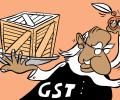
If other states follow suit, it is going to become difficult for the GST Council to decide on the next stage of reforms.
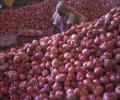
India's potato and tomato production could be marginally less in 2021-22 as compared to the previous year while onion output could be almost 17 per cent more than last year. This was stated in the first advance estimate of horticulture production released on Monday. The government also said total horticulture production is estimated to be at 333.3 million tonnes, a slight decrease of about 1.35 million tonnes (mt)?(or 0.4 per cent) over 2020-21.

However, it may still not change its stance on the policy rate as inflationary pressures are coming from high commodity prices.
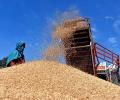
A decision to tap the 30 countries for exporting wheat was taken at a meeting of the commerce ministry on Thursday.

The Russia-Ukraine crisis, along with general bullishness in agricultural commodities, has ensured that after a fairly long time, most of the 24 commodities for which the Centre declares the minimum support price (MSP) are trading above it. The exceptions here are chana or gram and a few varieties of pulses. This might gladden the farmers, especially those who are still holding on to their stocks from the previous kharif harvest or are harvesting the latest rabi crop. But this could stoke retail and wholesale inflation.
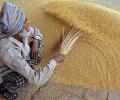
India's opening stocks of wheat in the central pool are expected to be 19.5-20 million tonnes as on April 1, 2022, the lowest in the last three years, but much higher than the normative level required for maintaining a buffer and strategic reserve, trade and market sources said. In accordance with the buffer and strategic reserve norms, India should have a wheat stock of 7.5 million tonnes in the central pool as on April 1 each year and this year's stocks, though the lowest in the last three years, will still be over 160 per cent more than what is required. On the export front, both government and trade sources are unanimous that this year (FY22) they will be 7-7.25 million tonnes, a record, while in the next financial year, they might touch even 10 million tonnes if the current momentum is maintained.

India's wheat exports could touch a new record of 10 million tonnes in 2022-23, up from a record seven million tonnes in the current financial year, if global market conditions remain choppy and no curbs are imposed on outbound shipments. That is the bullish estimate by officials from global trading firms and market watchers who say the Russia-Ukraine crisis has not only attracted global buyers to India but also pushed the price of Indian wheat from around $320 per tonne (FOB) to over $360 per tonne in less than 10 days. Food secretary Sudhanshu Pandey told reporters that wheat exports till February-end have already reached 6.6 million tonnes and by the end of March, outbound shipments will reach seven million tonnes.

Since January 2021, the inflation rate in health has stood in the range of 6.08-8.44 per cent.
India is looking to tap its diplomatic missions abroad to enable grain exporters in the country to ship out wheat and corn as supplies from Russia and Ukraine are expected to remain disrupted for some time to come. Between the two items, pushing for wheat is easier because of a huge domestic surplus. "We are hand holding our exporters and support from various Indian missions abroad is also being channelised accordingly," a senior government official said. Global wheat prices have jumped since the Ukraine crisis started, with wheat futures in the US reaching their highest levels since 2008.

In the three months leading up to the Assembly elections, Chief Minister Yogi Adityanath's government distributed over 1.4 million tonnes (MT) of wheat, 0.95 MT of rice, 0.10 MT of chana (gram), 101.9 million litres of soybean oil and 100,000 tonnes of salt as free ration. This was part of the Covid relief package, officials said.

'We can go somewhere between 35 per cent and 40 per cent.'

Though early days, meteorologists point towards a neutral La Nina during the initial phase of the four-month monsoon season this year that starts from June. If this holds true, by the time the rains hit the mainland, it could mean there would be one less reason to worry about the prospects of the monsoon this year. Weathermen said making any accurate prediction of how El Nino will behave and what impact it can have on the progress and distribution of rains is difficult to say at this point. A clear picture will emerge around late May or early June.

'The signal is crude oil prices will rise, I am cutting my subsidy. Be prepared, prices will rise.'

The Centre has, perhaps for the first time, decided to provide funding support to farmer-producer organisations, krishi vigyan kendras, custom hiring centres, and individuals for purchasing them.

Deciding the goods and services tax rate on fryums papad could be a messy affair with the Appellate Authority for Advance Rulings (AAAR) of Gujarat now ruling that the ready-to-eat product would draw 18 per cent rate. In that connection, it slightly modified the ruling of the state-based Authority for Advance Rulings (AAR). The AAR had also ordered that these products would draw 18 per cent GST but under a different classification.

'How low GDP would have been, we don't know.' 'It raises serious questions because so many indicators are pointing to such a sharp decline and GDP estimates are still showing 4 per cent growth.'
 © 2026 Rediff.com - Investor Information - Advertise with us - Disclaimer - Privacy Policy - Sitemap - Feedback - About us - Terms of use - Grievances